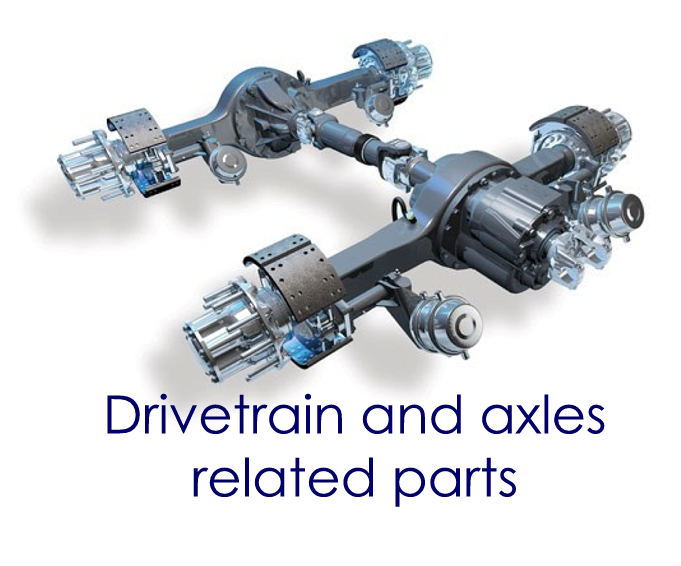
The drivetrain consists of several key parts working in a synchronized fashion to ensure efficient power transfer. The main components typically include:
- Transmission: Adjusts the engine’s power according to performance needs and driving conditions, providing various gear ratios.
- Driveshaft (or Propeller Shaft): A long, steel cylinder that transfers rotational power from the transmission to the differential.
- Differential: A gearbox, often situated within the drive axle assembly, that distributes torque between the wheels and allows them to rotate at different speeds, which is essential when turning corners.
- Axles: Shafts that connect to the wheels and, in drive configurations, receive the final power from the differential to propel the vehicle.
- Universal Joints (U-joints) / Constant Velocity (CV) Joints: Flexible components that connect the driveshaft to the differential and the axles to the wheels, allowing for movement as the suspension travels.